May
Near the end of the spring, OKW has completed large-scale improvements in harbor and rail networks in the Labrador area such that we can expand the beachhead. Army Group Amerika continues to operate as a single command, pushing the front southwest toward the initial jump-off points for Case Black. Three panzer groups are now in action pushing toward Montreal.
As the front approaches the northern American border, it becomes rapidly clear that we have stirred up a real hornet's nest here. The Americans are quick to detect encirclement maneuvers by the mobile units, and shift units out of salients to stymie movement on the flanks.
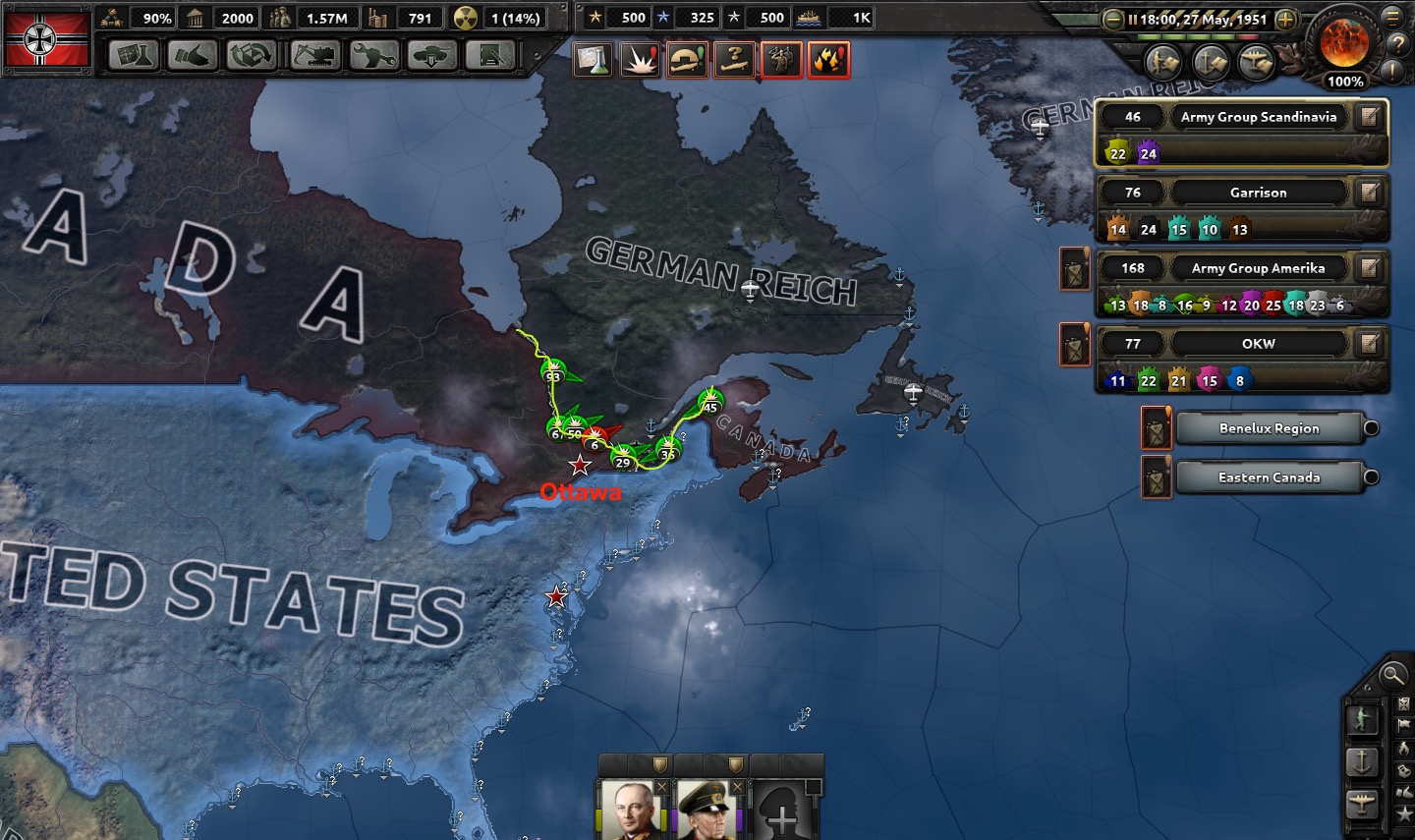
7th and 3rd Panzer Groups are heavily engaged, and what began as a long-arm encirclement run toward Bangor has become a desperate attempt to prevent the armor from being cut off in the rear. Hausser's 7th Panzer Group finds itself in a difficult situation south of St. Lawrence. Mechanized infantry from that group was able to occupy Montreal, but was quickly pushed back to the northeast by a strong American counterattack. The armor is under fire south of the river, attacked on three sides with, and the mechanized units must hold the rear right flank to prevent the entire group from being cut off.
3rd Panzer Group is in a slightly better defensive position, but further forward progress is out of the question at the moment. Manteuffel's 5th Panzer Group, supported by 24 infantry divisions, has attempted with some success to extend the left flank to the east and disperse the American effort.

The Americans exert pressure all along the front with powerful counterattacks, making lateral movement to plug gaps difficult as our units are continuously engaged. Compounding the issue is our inability to secure forward air fields to challenge the Americans in the air along the southern front. The existing air bases in Quebec and Labrador are at capacity, but our fighters lack the range to make it to the furthest extent of the St. Lawrence line.
Meanwhile far right flank is more stable, but not free of pressure from American counterattacks either. We must keep substantial infantry groups here to prevent collapse, which would endanger the whole of the army group:
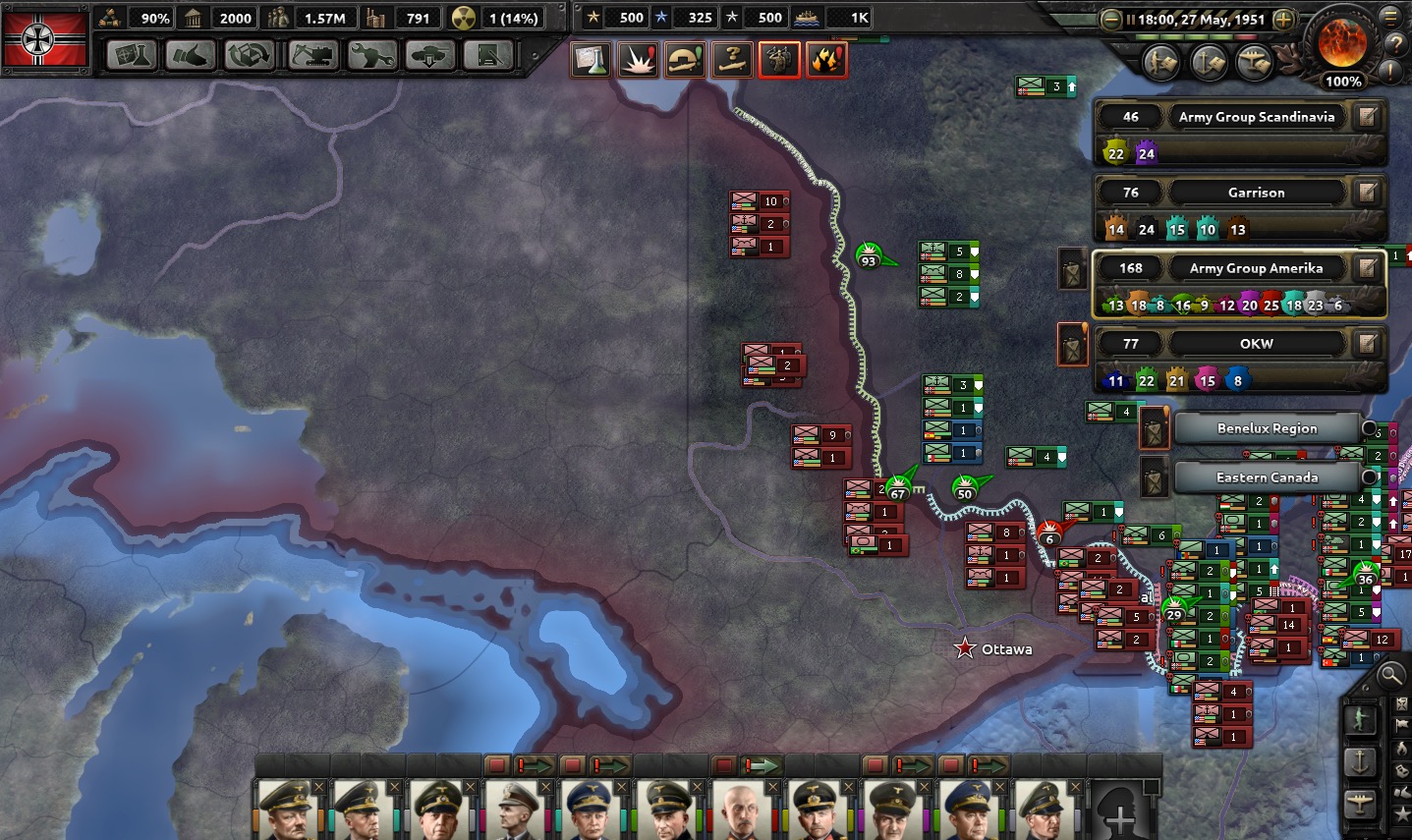
The Fallschirmjager, who were slated for an airborne drop somewhere, have been pressed into service on the right to aid in the defensive effort. OKW fears that it is already losing the initiative in the theater and must do something to change its fortunes.
Supply and reinforcements
The force allocation for Belisarius is designed for an expansive front on a scale similar to that of Barbarossa. However, at this early stage the occupied territories in Quebec and Labrador are only able to support supply of a small fraction of the overall force, making infusion of reinforcement armies difficult.
2 infantry armies and a panzer group (51 divisions) await deployment orders at Labrador, but the supply situation at the front is already serious even without their presence:
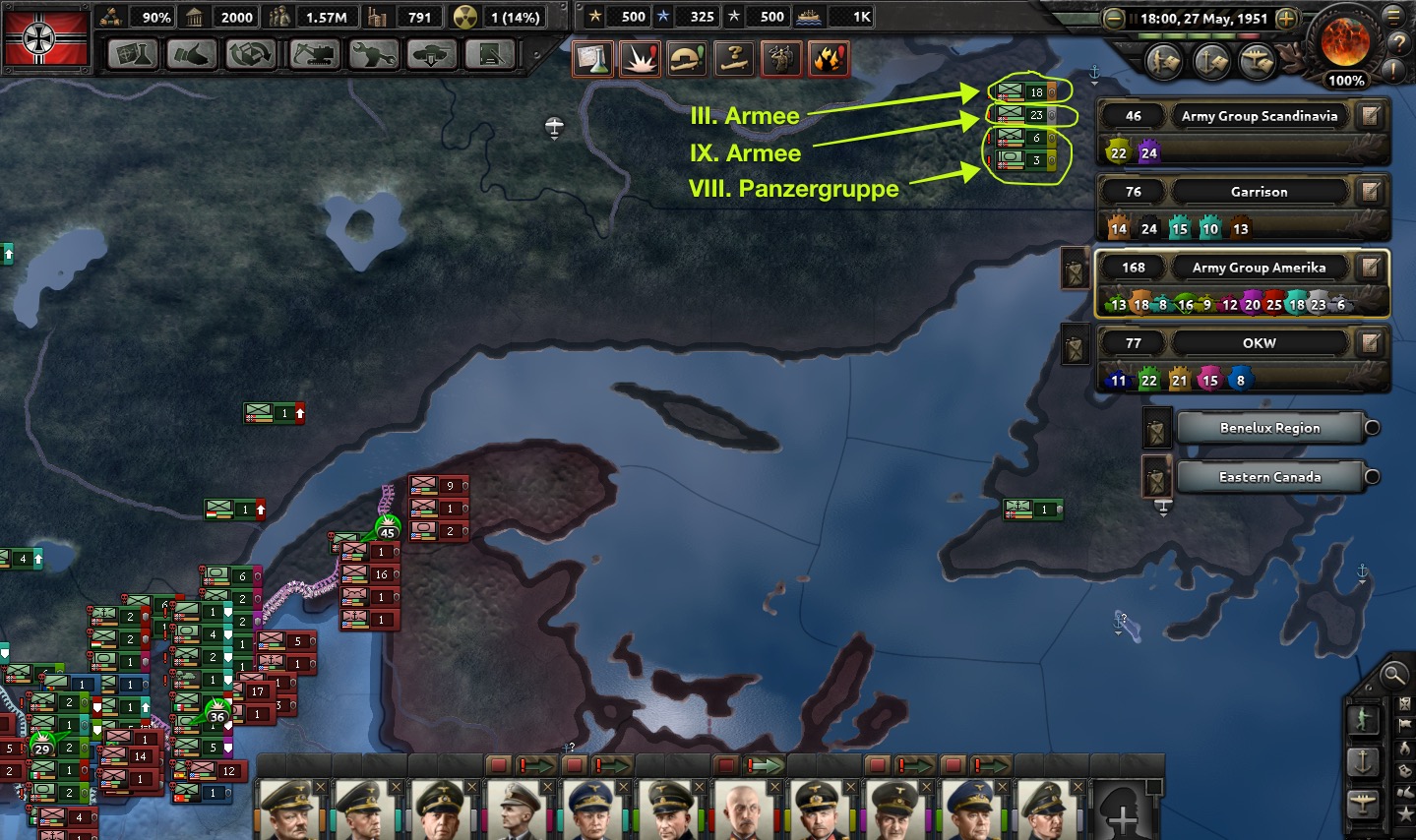
Meanwhile 103 fresh divisions embark near Amsterdam. 1 understrength panzer group is already formed here, and these units will probably be used to marshal an additional one and 3 more infantry armies. 1st Panzer Group, on garrison duty in France, can also be brought over if needed.

Notice also that the Kriegsmarine maintains a sizeable reserve here ready to depart for the Atlantic:
- 3 carriers
- 5 battleships
- 10 cruisers
- 39 destroyers
- 126 submarines
We already enjoy full naval superiority in the Atlantic and around the coastal areas we occupy in Canada, so these ships are not desperately needed at the moment. However we cannot approach the American east coast from the sea, as they have air bases everywhere and will punish us from the skies. The US now enjoys the same advantages we did during Sealion.
American strength
With such a force arrayed against us in Canada, it's worth taking stock of what the enemy has overall:
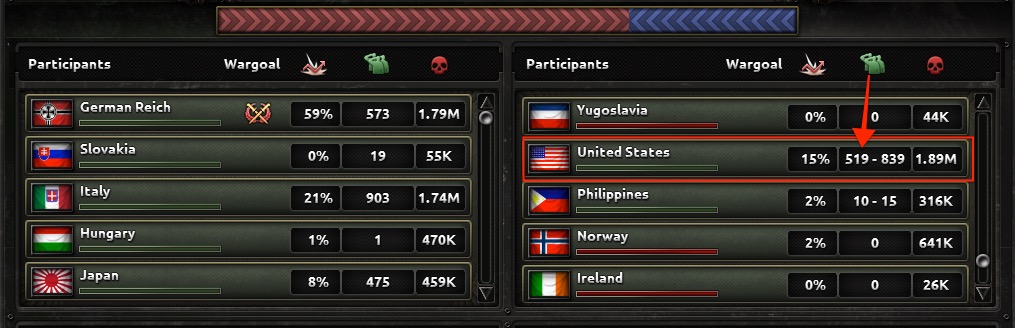
With at least 500+ enemy divisions in America, all hope of numerical superiority on the ground is probably lost. The goal is to open up a broader front, upon which we can unleash armored breakthroughs at weakpoints to create encirclements. The Wehrmacht is not a juggernaut; it is a scalpel that must employ mobility and commander initiative to create local points where it can employ superior firepower.
The naval battle
The good news is that we have complete control of the high seas. Two carrier groups patrol the northeastern passageways, allowing free movement of troops and supplies into Labrador.
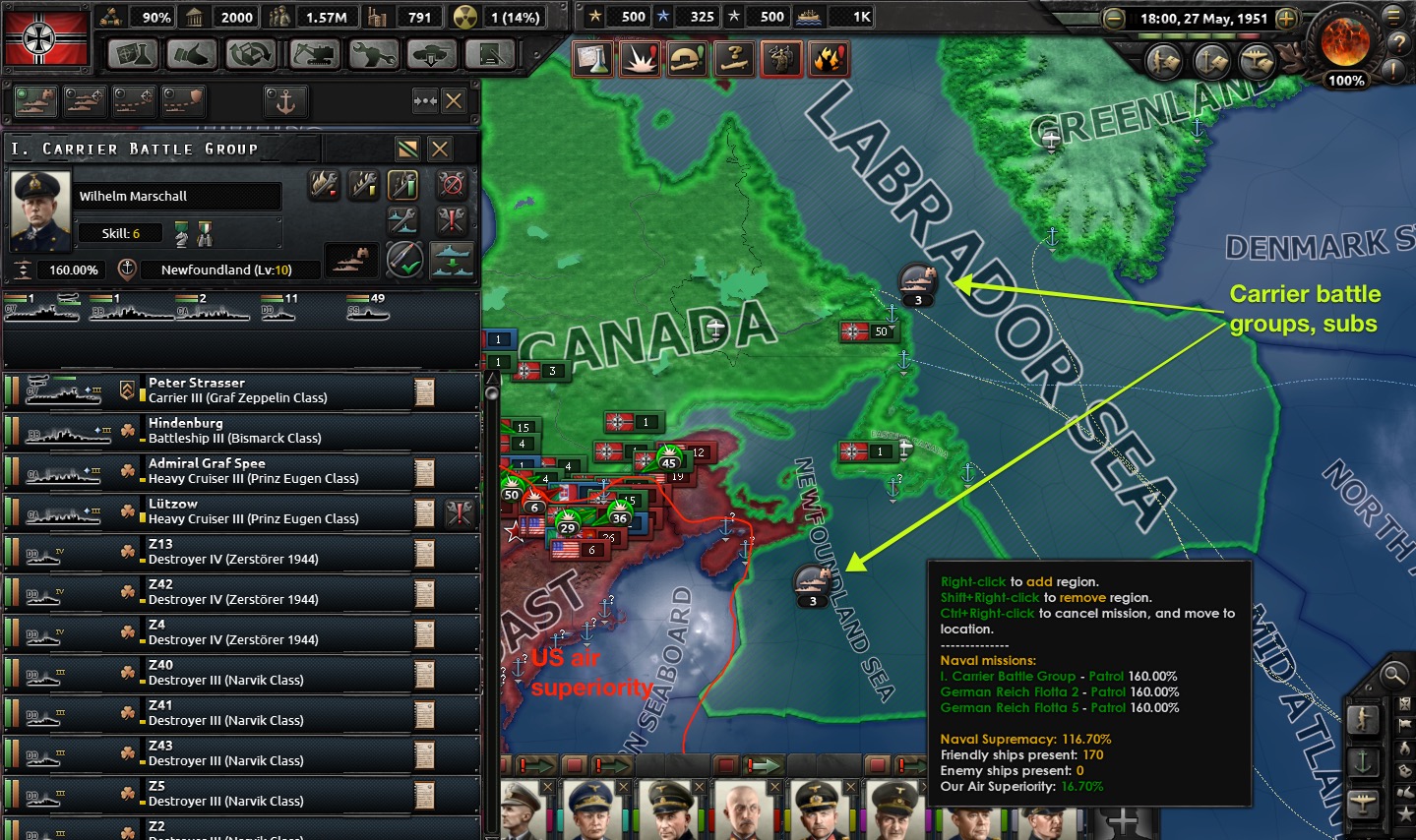
Since we cannot penetrate the enemy air screen on the American east coast, a third carrier battle group is put to work destroying Allied supply convoys in the lower Caribbean and South American approaches:

Manpower troubles
12 years of continuous warfare has taken its toll on the Reich's manpower pool. Long-term operations against an enemy of this strength are simply not sustainable, which has ominous consequences as the prospects for a quick victory in North America fade.
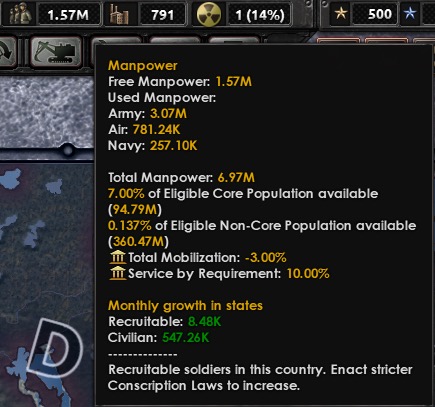
Notice that while the Reich has over 360 million service-eligible adults available in occupied territories, only a very small fraction of these people can be conscripted.
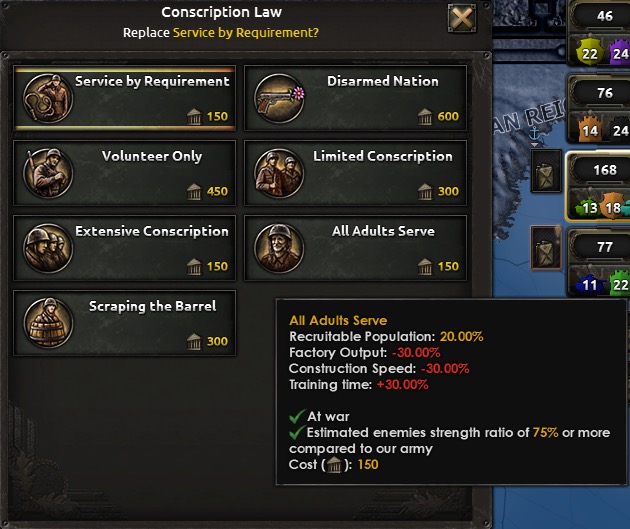
We are currently operating on a "service by requirement" conscription policy, which means that 10% of the population is recruitable:
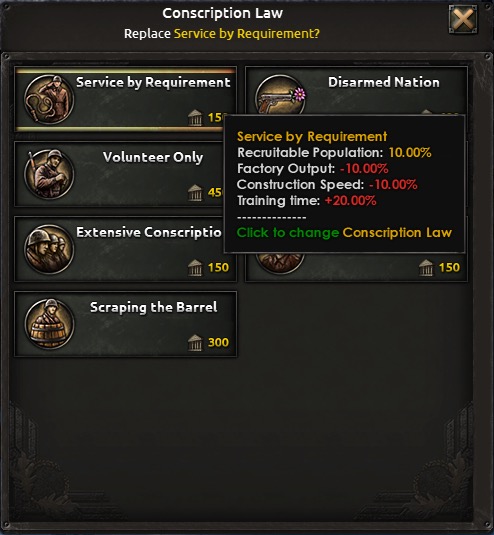
If things become desperate, we keep the move to an "all adults serve" policy in our back pocket -- bumping the recruitable-population percentage to 20%. However this brings with it substantial penalties in both industrial production and training time.