March - Eastern Stall and Sealion Prep
Winter gives way to muddy spring in 1943, and the Wehrmacht finds itself stuck in a real slog in the east:
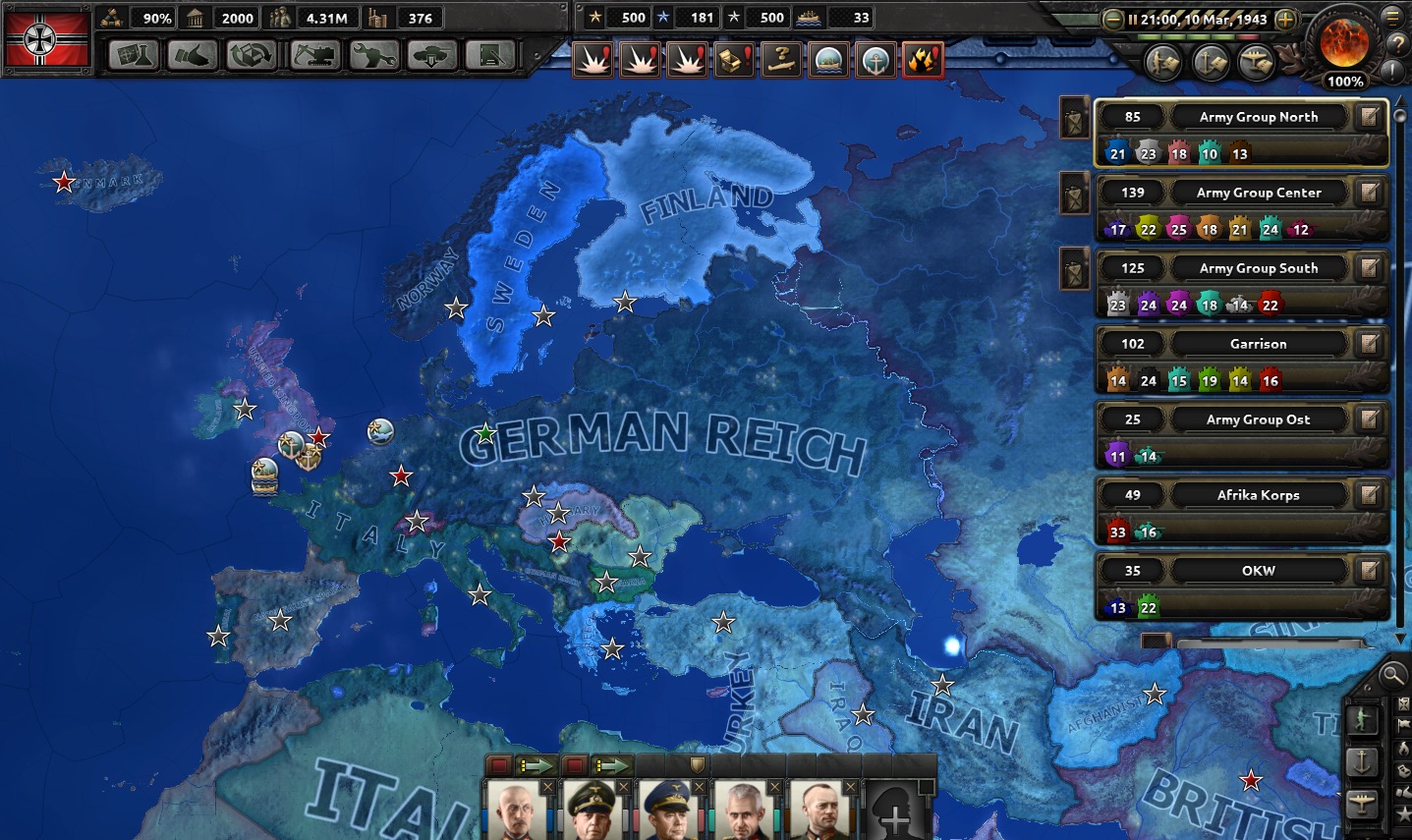
Since the end of the summer of 1942, the supply situation on the Eastern Front has gone from bad to worse. The Reich is dangerously overextended, with little in the way of victory-point cities or resource centers between the front and the Urals. Infrastructure and rail networks are so poor in the Russian interior that many of the forward units have been rendered incapable of further offensive operations. Army Group North is parked with its left flank at Arkhangelsk, covering a large salient it cannot collapse. On the extreme left flank, some Finnish units must defend frozen-wasteland sections of the front on less than 10% of their recommended daily supply allocation:
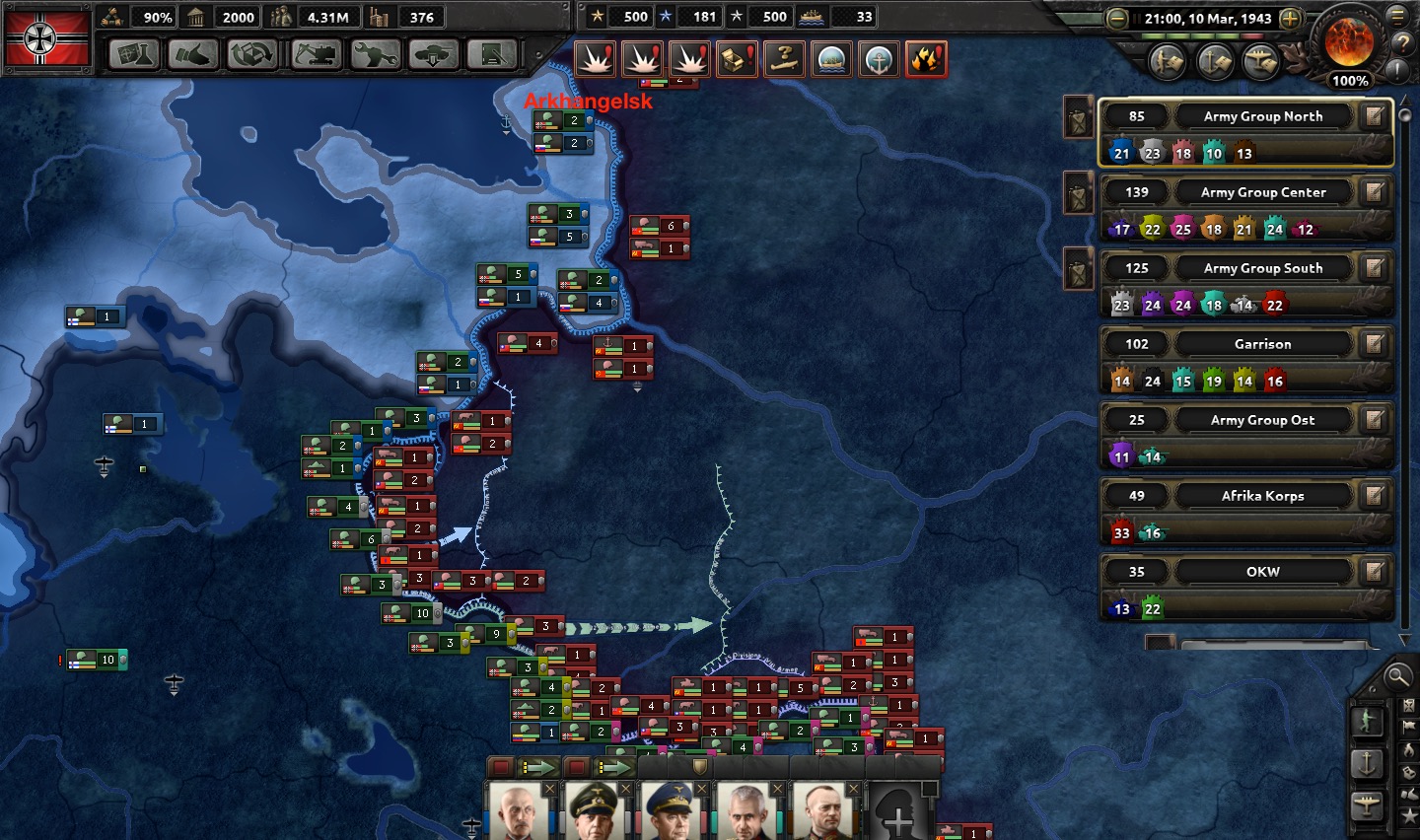
Army Group Center has a relatively favorable supply situation, as it remains in a sector with decent infrastructure. But with the other army groups unable to advance, there is little to be gained by creating a new salient in the center:
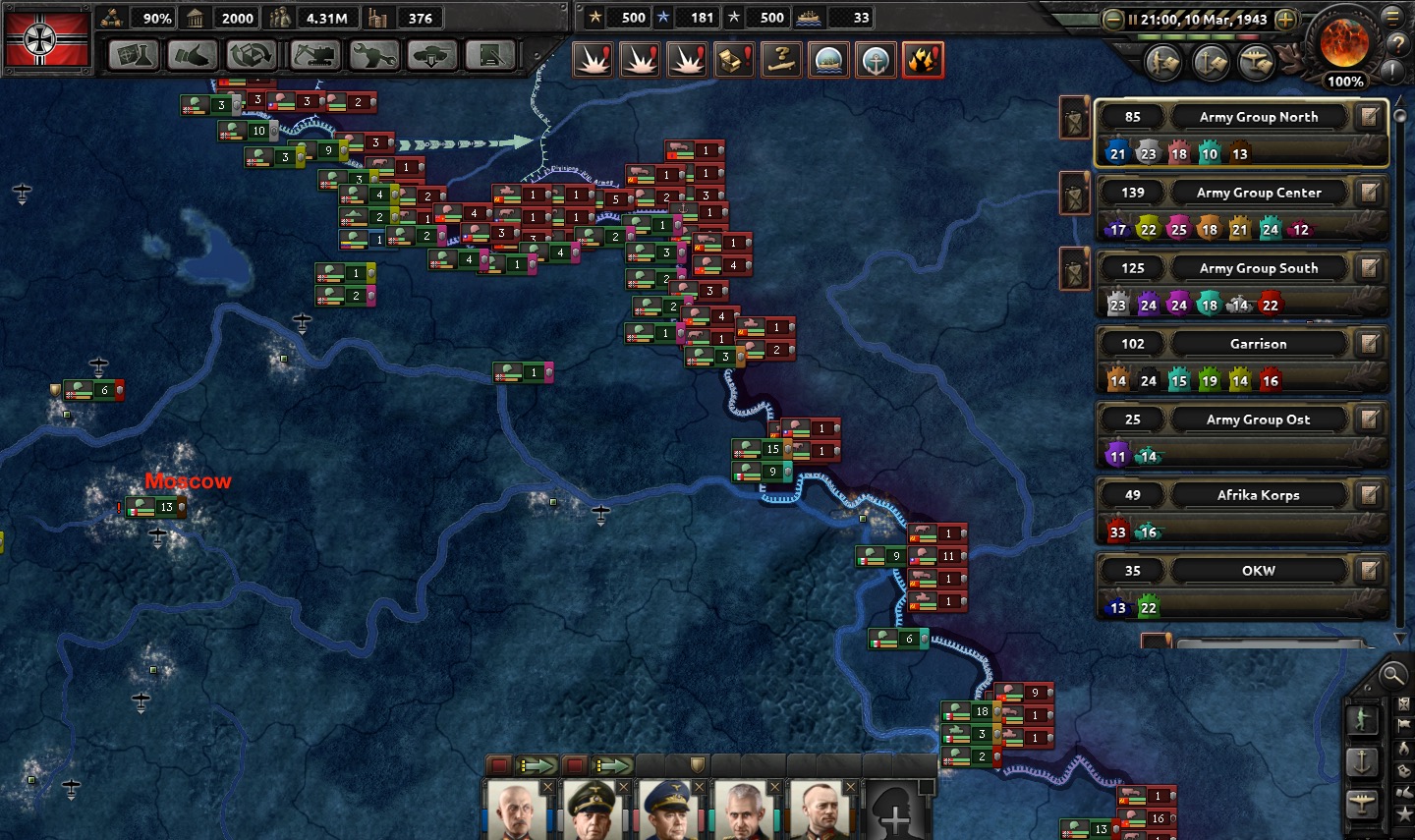
Army Group South is also unable to move due to lack of supply and resulting fatigue. In any event, we are well past the originally proposed stop line and with good reason, as any further progress in the south would mean a substantial extension of the front into central Asia:
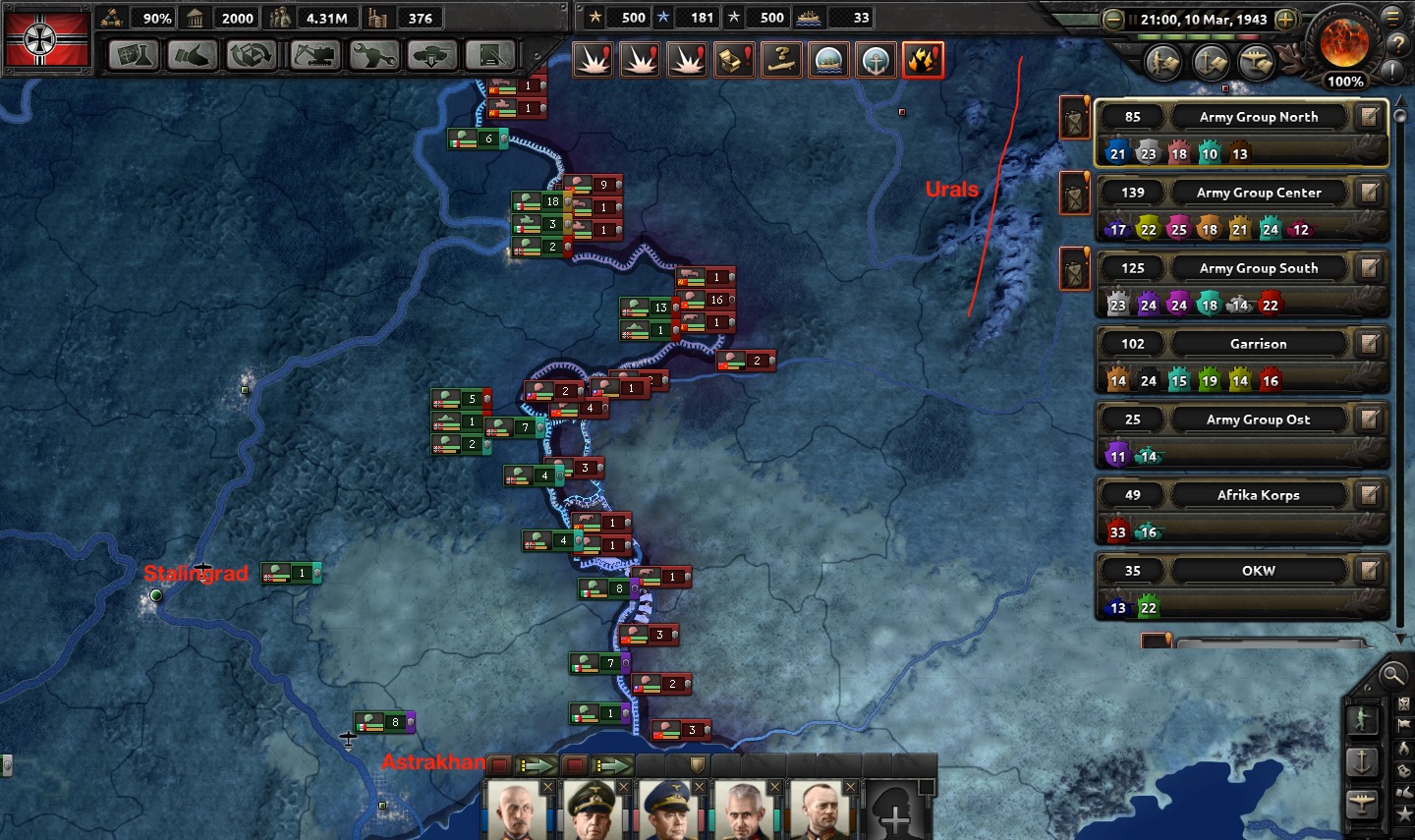
Here's a wider look at the front. All panzer groups have been withdrawn from forward positions, with most of them being redeployed to the western theater under OKW's command. Every day we remain idle is another day the Soviets can strengthen their defensive lines, which are still very frail. We have tried to alleviate the supply situation by rotating the infantry armies in and out of the front line, which works well for us as we must maintain a sizeable rearguard to police against partisan attacks:
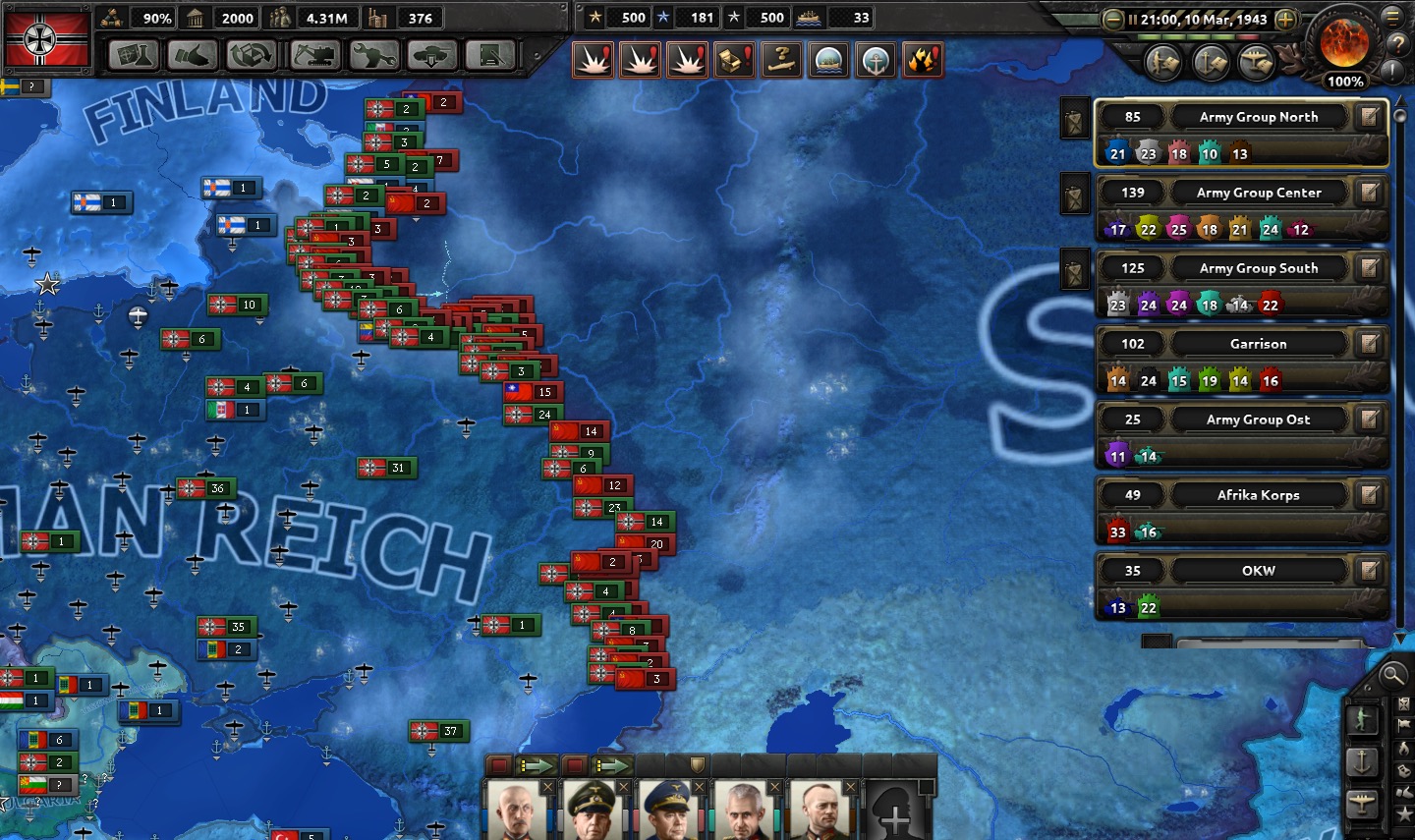
The good news is that the Red Army is still a spent force, with over 4 million casualties and something in the neighborhood of 50 divisions. It's likely that many of these units are poorly trained and hastily organized. The Soviets refuse to surrender, so we may just be forced to stick with the status quo as the far Eastern border of the Reich.
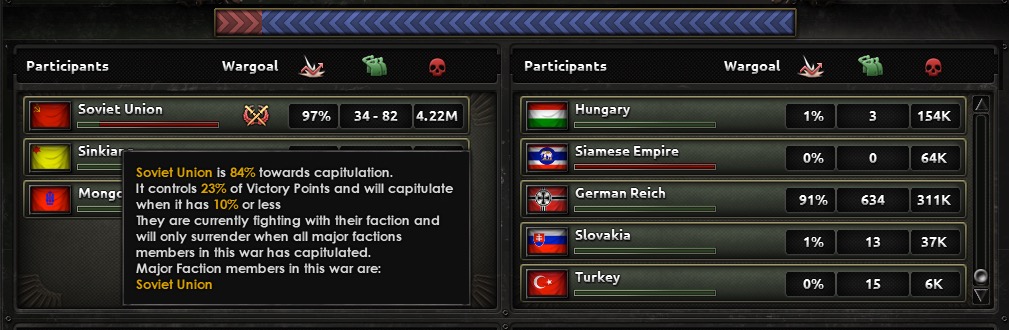
The Soviet AI has done something rather silly and relocated its capital city to Vladivostok, on the Pacific coast:
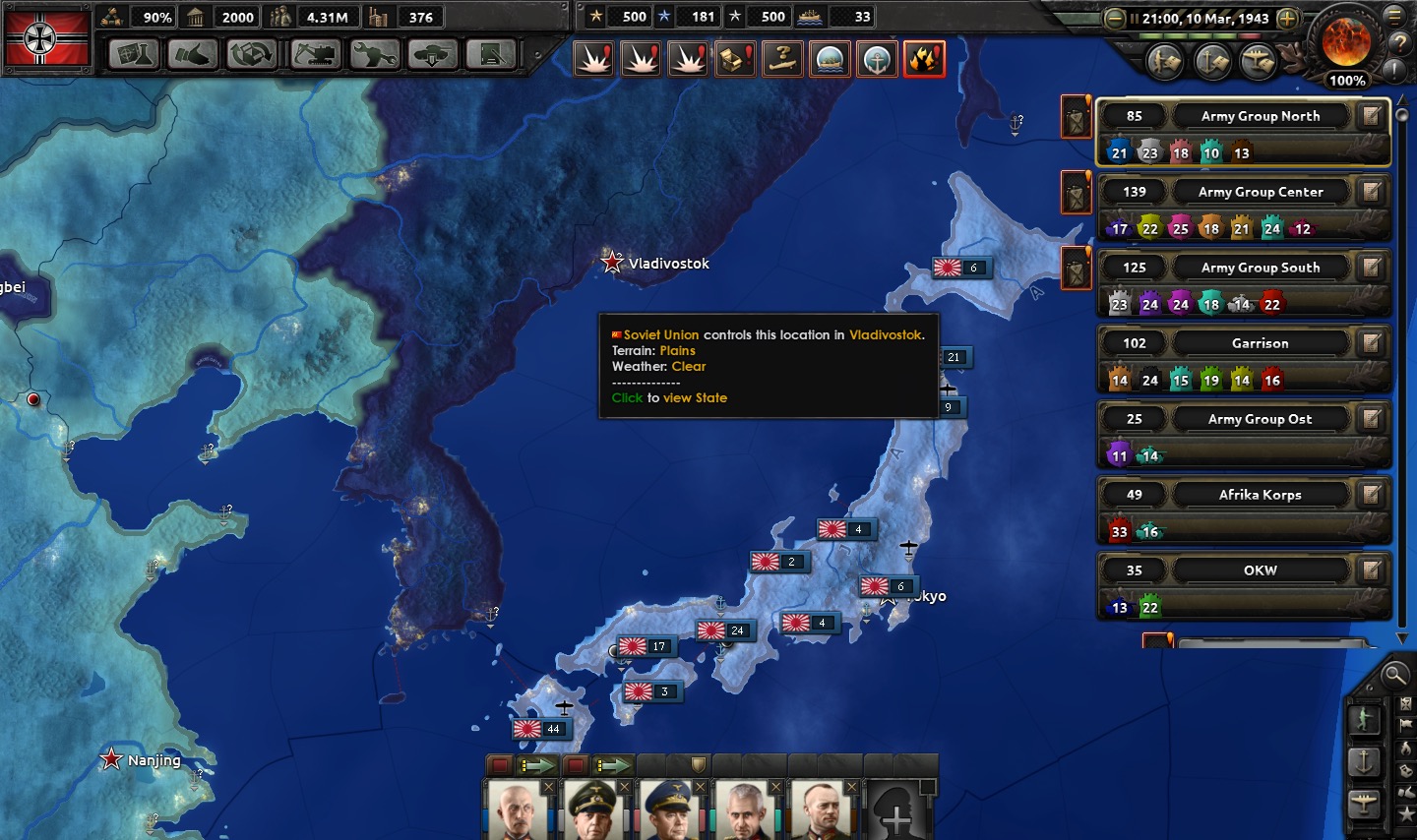
Even if the Red Army is at its maximum estimated strength of 82 divisions, nearly all of that is deployed on its western front. So the far east remains undefended, but the Japanese stubbornly refuse to help out.
The Afrika Korps
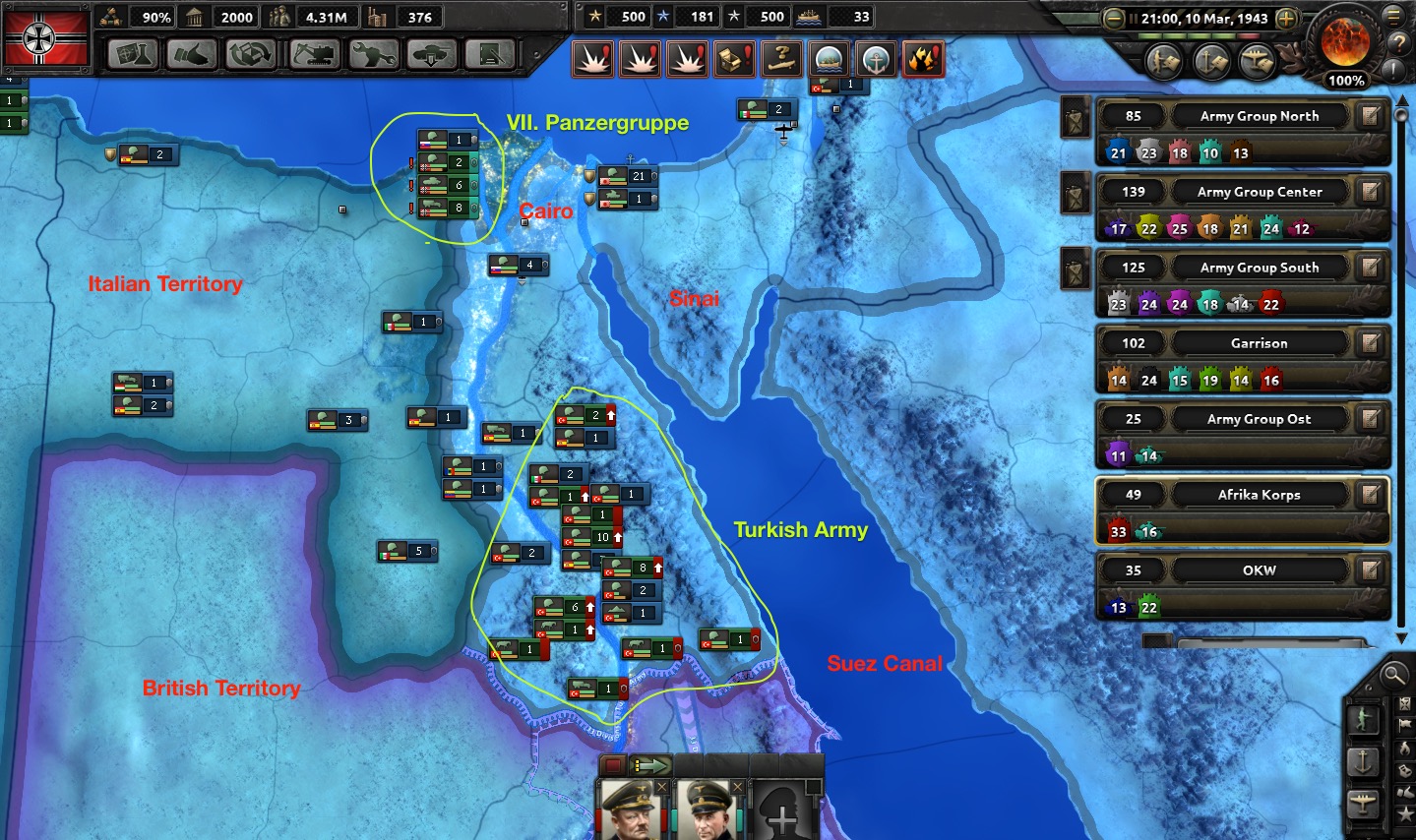
We have secured Turkey as an Axis faction member, and with their help we've reluctantly agreed to bail our Italian friends out of their mess in Africa. OKH has assumed control of a Turkish infantry army, and with the help of 7th Panzergruppe, pushed over the Sinai Peninsula and captured both Alexandria and Cairo. With the British cut off from their main supply source, the panzers rest in Alexandria and leave the Turks and Italians to push into the lower Sahara:
The Battle of Britain
Although the endless fight in the east is still a considerable drain on the war machine, the Luftwaffe has managed to turn things around in the west. We have established air superiority over both the English Channel and lower Britain, and have started concentrated bombing campaigns in these areas:
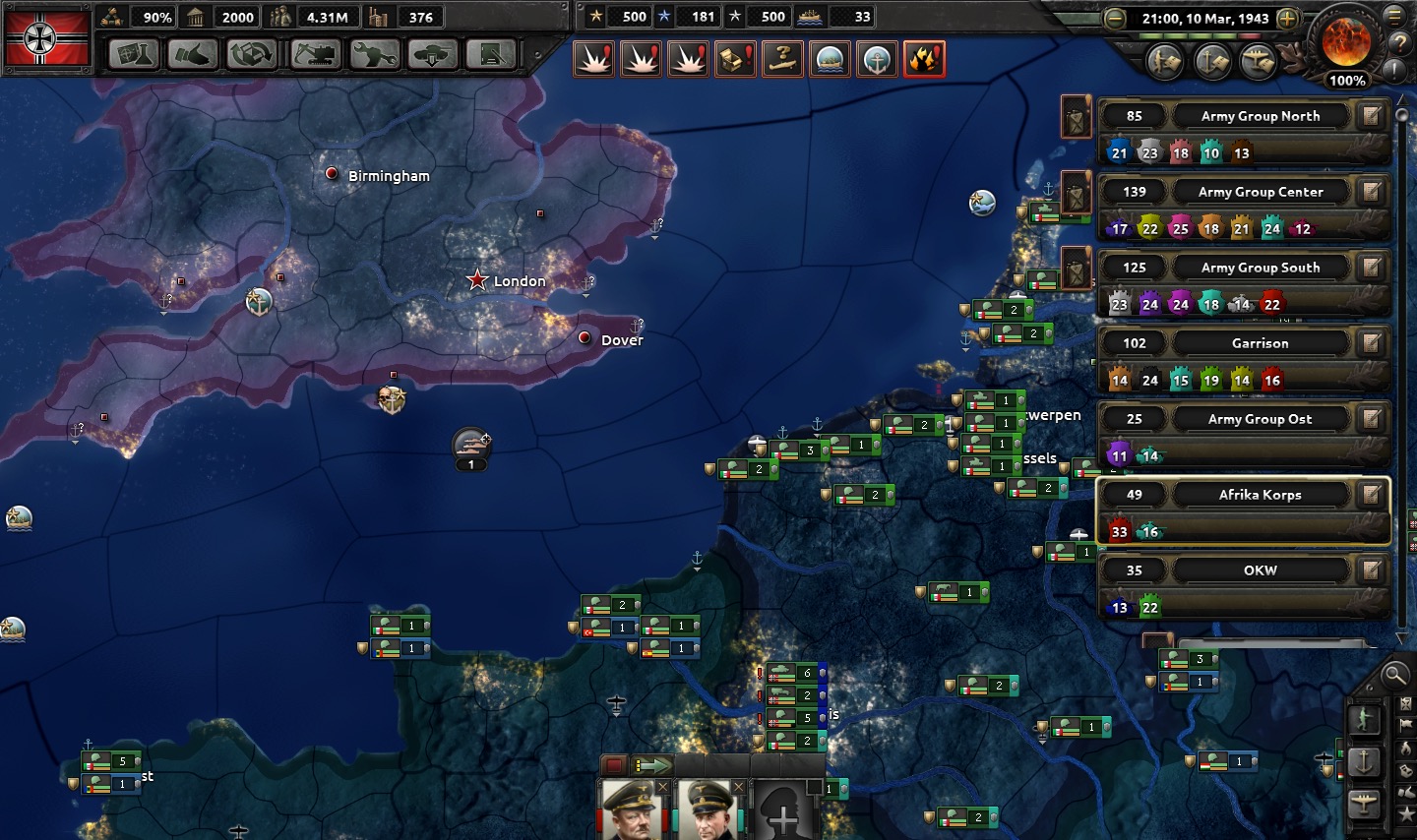
In the air, the situation is quite good and we hope this will continue until we are in a better position to think about Sealion. There are plenty of aircraft available for sorties of every type, including interdiction (intercepting enemy bombers), naval strike, and port strike (bombing dockyards and ships in port).
The RAF still exists in large numbers, however, and grows stronger as it is joined by increasing numbers of American planes. The enemy seems to concentrate these assets out of range of our bombers, and will occasionally throw all its weight into one sector if it sees targets of opportunity.
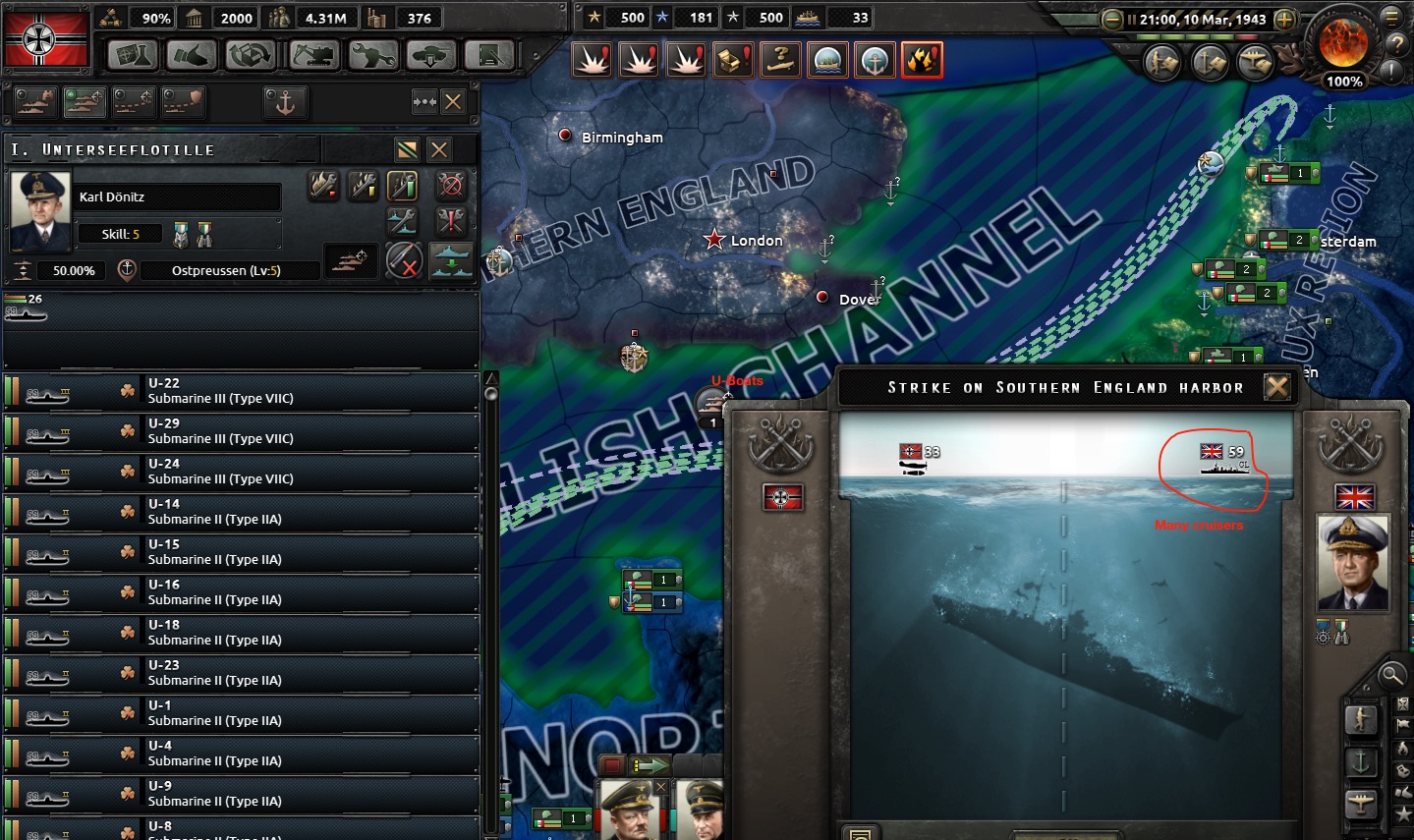
Without a consistent day-to-day challenge in the air, though, the Luftwaffe is sinking enemy ships in increasing numbers.
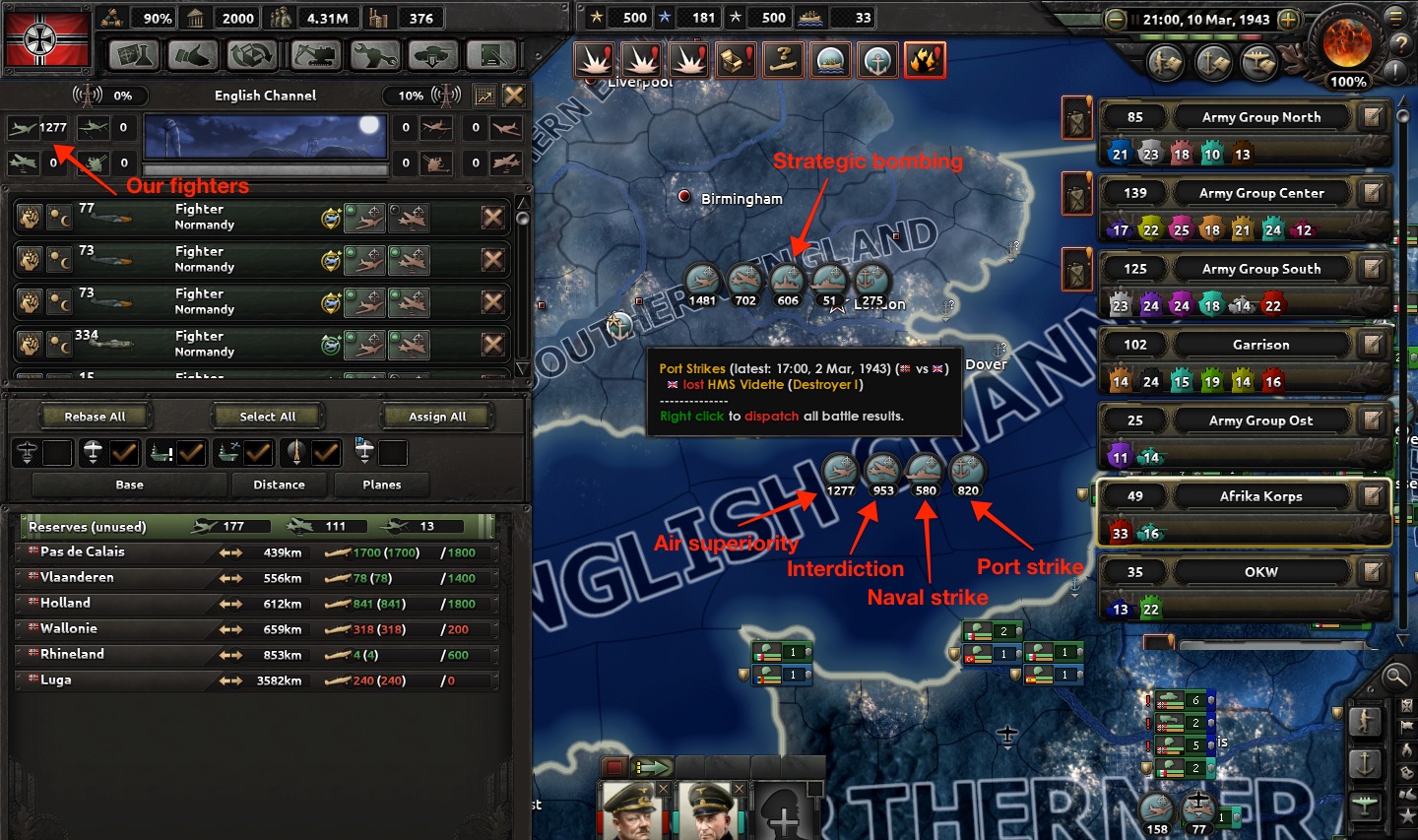
Cumulative numbers for the Luftwaffe in all theaters, with most in the west:

Naval War
The Kriegsmarine is still a work in progress, but there are enough U-boats available to begin conducting limited naval operations. We are still careful to avoid open confrontation with the Royal Navy, which still has over 100 surface ships, but the subs are good at striking easy targets (Allied supply convoys and the occasional lone vessel). Luckily the Luftwaffe keeps the enemy at bay, so enemy ships rarely hang around in large numbers in the Channel.
Production Concerns for Sealion
Naval invasions in HOI4 are more difficult than in previous versions. You can't simply load up ground units on imaginary transports and move them around at will. A naval invasion requires a battle plan with a source and destination port, and the ground forces involved require several months to prepare and organize before they will carry it out. In addition, the sea route can only run through sectors in which you have both (1) naval superiority, and (2) reasonably good intelligence on enemy shore dispositions and naval assets. We can easily get (2) with a good aerial presence in the region, which we already have.
The game tells us we also have (1), because we have both a persistent naval presence (subs) and "naval aviation" presence (naval bombers). But the British still have a large surface presence somewhere nearby, so this can become a big problem for us.
Finally, you need convoys to actually transport ground units. Convoys in the game are used for transport of both goods (resources) and military units. They can be targeted and destroyed if enemy ships hang out around "convoy routes", which are shown here by the dotted lines:
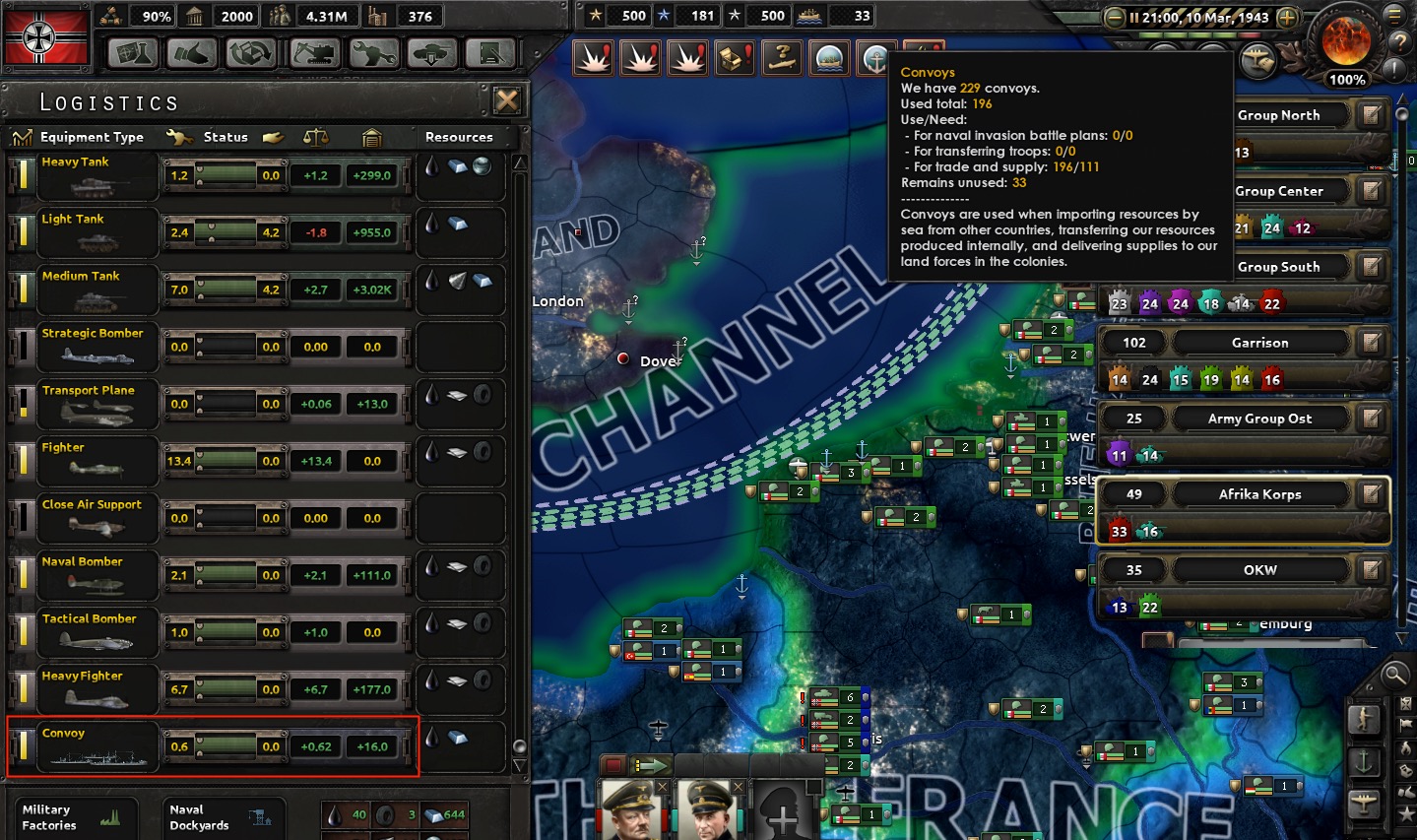
The average panzergruppe requires around 50 convoys for a naval invasion cross-Channel, so we still find ourselves short in this department. We have placed a heavy emphasis on convoy production, as shown in the screenshot above, and we build at a rate of just over 1 every two days. We need dockyards to do this, so this comes at the expense of U-boat production:
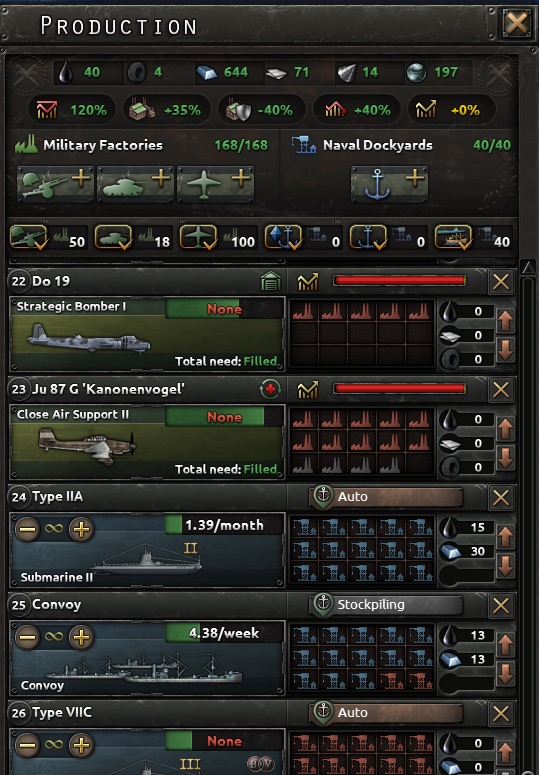
A third of our dockyards are currently damaged and inoperative, but repairs are unlikely to come anytime soon as almost all of our "civilian construction" assets are tied up in the east working on rail and infrastructure improvements to keep the forward armies supplied. Production capacity may actually decrease, as sabotage and enemy bombers are still occasionally a problem.
High Command estimates that it will need at least 150 convoys to support simultaneous landings of two panzer groups and an infantry army, so at just under 5 convoys per week, we need at least another four months.
The American Threat
The US officially entered the war in May 1942, but hasn't done much on the ground. The British are being heavily reinforced from across the Atlantic, but we thankfully haven't yet begun to see the real repercussions of having yet another power enter the fray against us. Not much seems to be going on in the Pacific, either. The estimates show that the US maintains the second-largest standing army in the world:
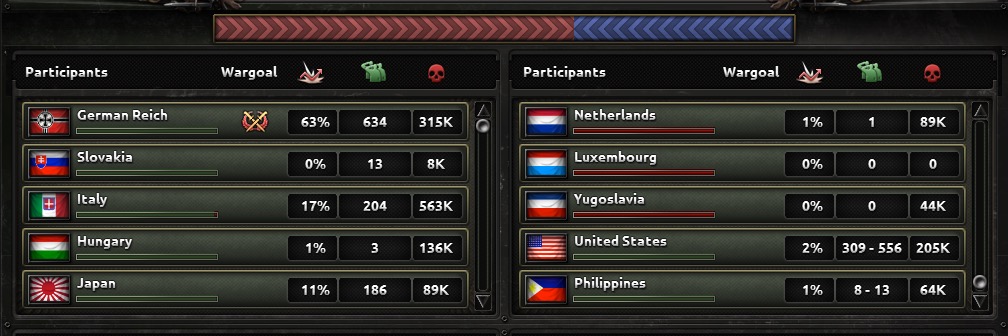
Where are they keeping all those divisions?